Furnace quit? AC giving up in July? Call HVAC Sioux City, tell us what’s going on, and a licensed local technician can come out to your home.
Free to call · Furnaces, boilers, heat pumps, central air and mini splits
- It’sFreeto call
- Heating& Coolingall year
- LicensedLocaltechs
- ServingSioux Cityhomes
- FurnacesBoilersheat pumps
Sioux City HVAC help, starting with one phone call
When the furnace stops at two in the morning in January, you don’t want a phone tree or a list of strangers to work through. You want one call that gets a licensed heating technician headed to your house. That’s what HVAC Sioux City is for.
Call us, tell us what’s happening (no heat, a new noise, a flashing light on the control board, water on the basement floor), and we’ll set up a local technician to come out and fix it. Calling is free, and there’s nothing to fill out first.
We cover every kind of home comfort system you’ll find around Siouxland: gas furnaces in ranch house basements, hot water boilers feeding cast iron radiators in the big older houses on the hills, heat pumps, central air conditioners and ductless mini splits in additions and finished attics.

What is your system doing?
Pick the one that sounds like your house. Each page explains the usual causes, what you can safely check yourself, and what a technician does about it.
-
No heat at all
The thermostat is calling, the house keeps getting colder, and the furnace either stays silent or lights and quits.
Read more → -
Furnace blowing cold air
The blower runs but the registers push out cool air. Usually ignition, a dirty flame sensor or a safety switch tripping.
Read more → -
Turns on and off, over and over
Short cycling wears parts out fast. A clogged filter, a blocked vent pipe or an overheating heat exchanger are common causes.
Read more → -
Heat pump caked in ice
A little frost is normal. A solid block of ice that never clears means the defrost cycle or airflow needs attention.
Read more → -
Cold radiators, banging pipes
Hot water heat that is uneven, noisy or keeps shutting down. Air in the lines, low pressure or a failing circulator.
Read more → -
AC runs, house stays warm
The system hums all afternoon and the upstairs never drops below eighty. Refrigerant, coil or airflow trouble.
Read more → -
AC won’t start or trips the breaker
Clicking, humming or nothing at all from the outdoor unit. Capacitors and contactors are frequent culprits.
Read more → -
Mini split blinking or dripping
A ductless head flashing a code, leaking water down the wall or blowing room temperature air.
Read more → -
Due for a furnace checkup
Get the burners, flame sensor, venting and safety controls looked over before the first real cold snap.
Read more → -
Gas smell or CO alarm
Get everyone outside first, then call the gas utility or 911. Here is exactly what to do, in order.
Emergency steps →
How a call to HVAC Sioux City works
Three steps between a cold house and a working furnace.
Call us
Dial (555) 010-0142. It’s free, and you don’t need the model number or any paperwork to get started.
Tell us what’s happening
What the system is doing, what kind of equipment you have if you know, and which part of Sioux City you’re in. A light code or a smell is a useful detail.
A local technician comes out
A licensed heating and cooling technician comes to your home, tracks down the cause and goes over the repair with you before the work starts.
When the technician gets there
- They ask what you’ve noticed and when it started: the order things failed in is a clue.
- They check power, the thermostat, the filter and the venting before opening up the equipment.
- They test the parts that usually fail: igniters, flame sensors, pressure switches, capacitors, motors and control boards.
- They explain what they found in plain language and what fixing it involves.
- Once the repair is done, they run the system through a full cycle to make sure it holds.
Furnace, boiler and heat pump repair for long Iowa winters
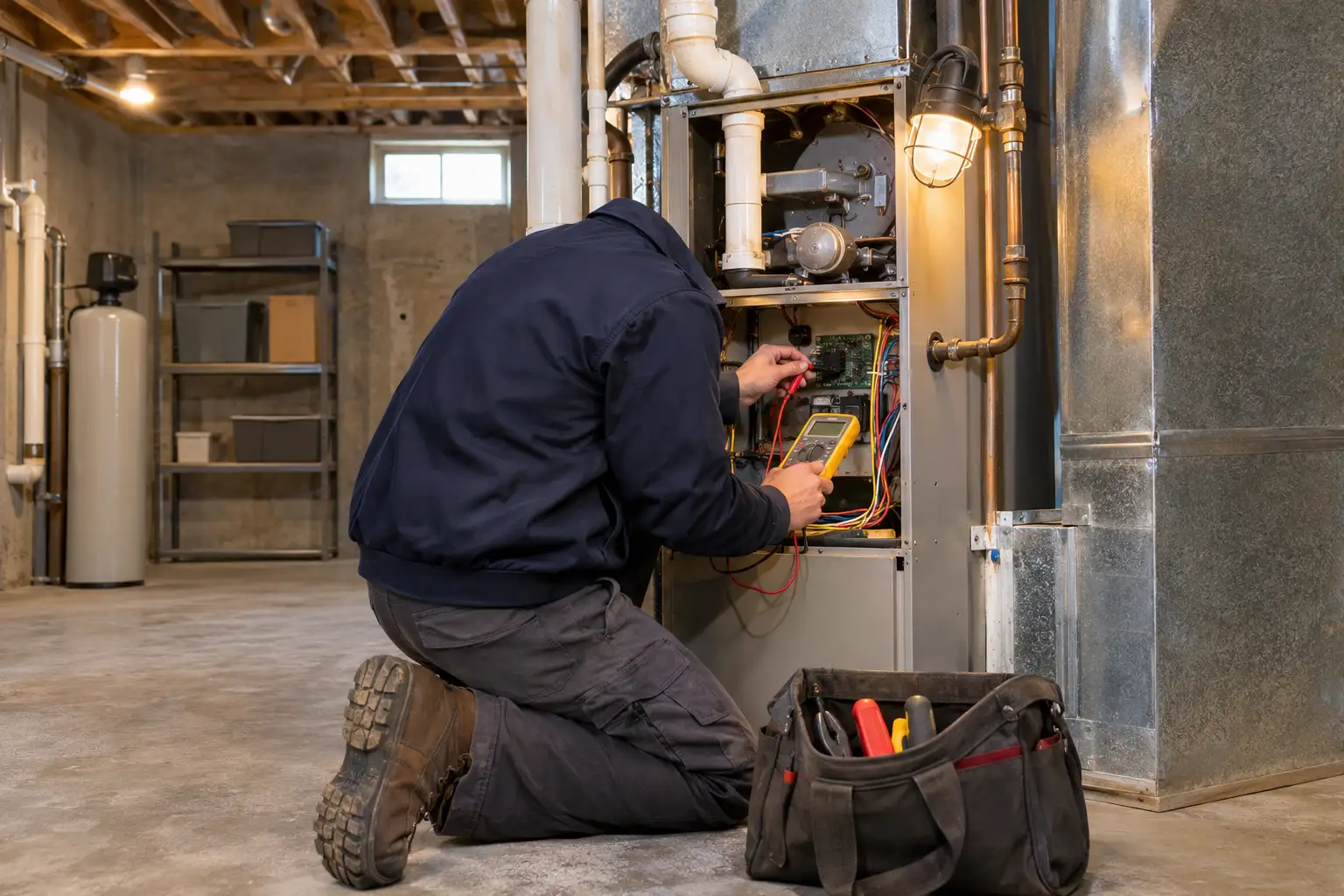
Most Sioux City houses heat with a natural gas forced air furnace, and most winter calls start there: a furnace that won’t light, lights and shuts off, blows cold air, or runs constantly without keeping up. The fix is often one worn part (an igniter, a flame sensor, an inducer motor, a pressure switch), but finding the right one takes testing, not guessing.
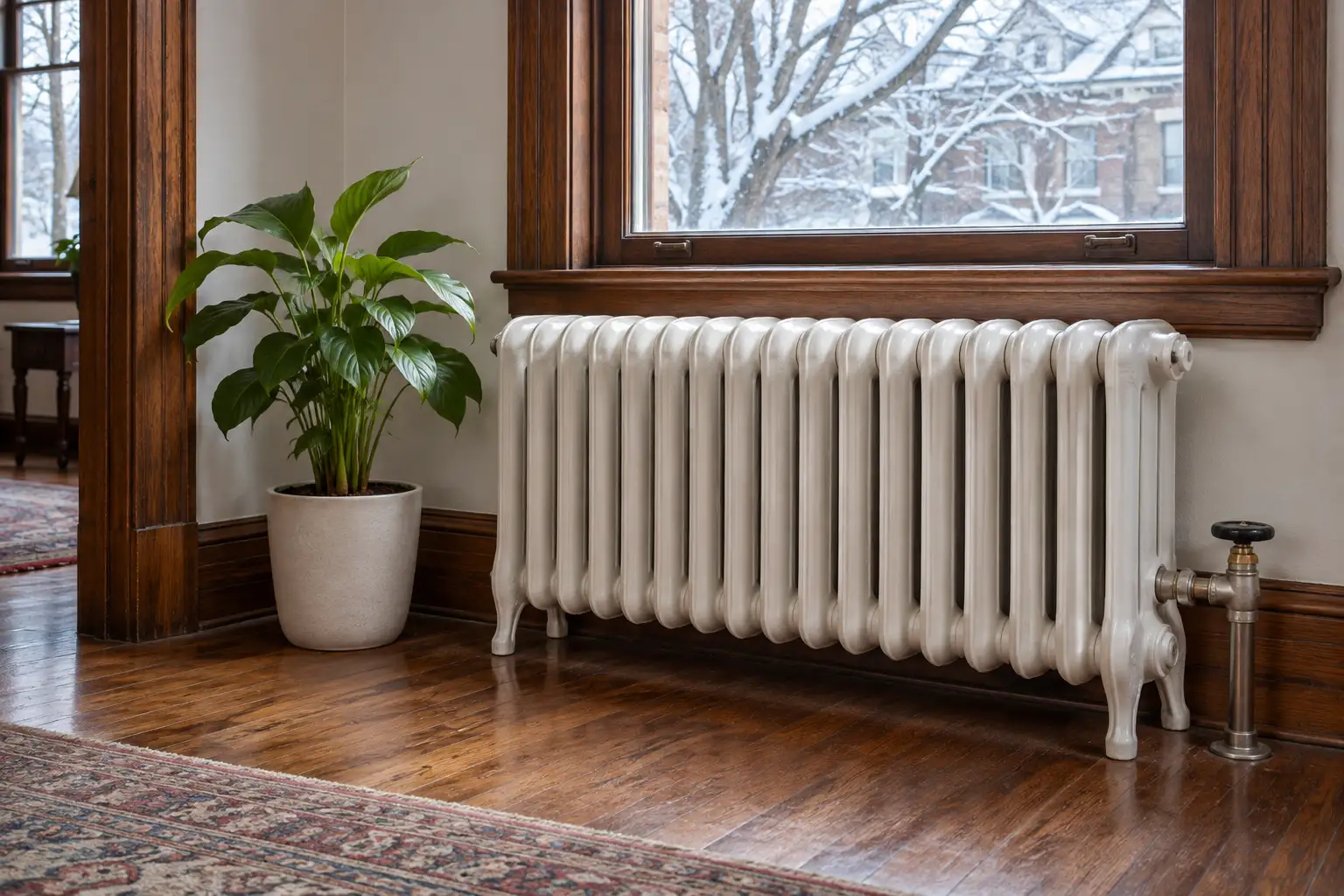
Older homes are a different story. Plenty of two story houses built before the war still run on hot water boilers and radiators, and they need someone comfortable with expansion tanks, circulator pumps and bleeding air out of the lines. Newer and remodeled homes increasingly add heat pumps, which bring their own cold weather quirks.
- Furnace RepairGas furnace not lighting, blowing cold, cycling off or locked out with a flashing light.
- No HeatThe house is getting colder and nothing you try brings the heat back.
- Heat Pump RepairIced over outdoor unit, lukewarm air, or backup heat running nonstop.
- Boiler & Hot Water HeatCold radiators, banging pipes, low pressure or a boiler that keeps shutting down.
- Thermostat RepairA blank screen, a system that ignores the setting, or a new thermostat that won’t talk to the furnace.
- Furnace Tune UpA full check and cleaning before the first hard freeze, or midwinter if it is acting up.
Central air and mini split repair when summer turns muggy
Sioux City summers swing hot and humid, and the river valley holds that sticky air on still July evenings. An air conditioner that limps through June often quits on the first long stretch of ninety degree days, when it has to run all afternoon and into the night.
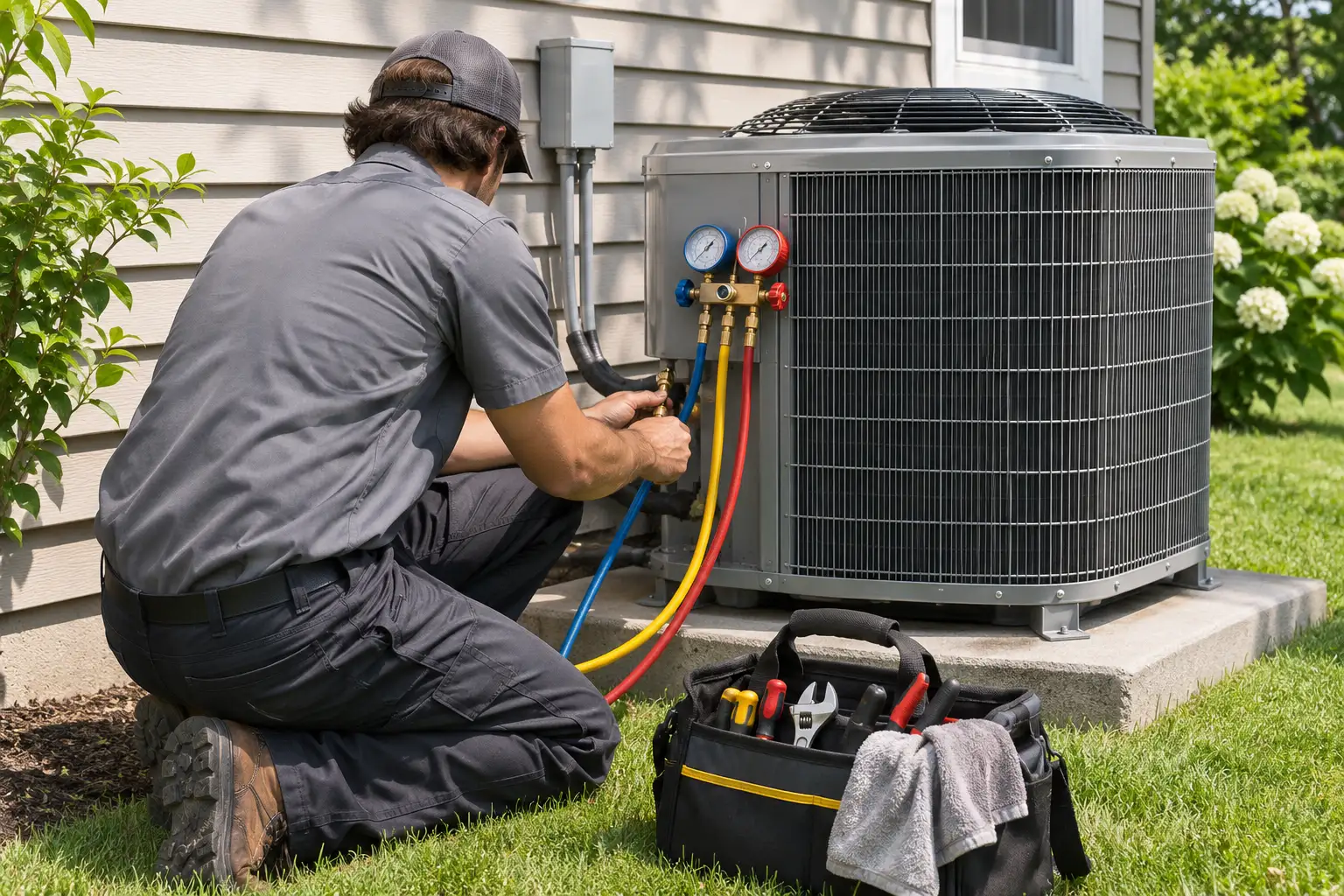
Common calls: an outdoor unit that hums but won’t start, a system that runs constantly while the house creeps warmer, ice on the copper lines, water pooling around the indoor coil, and ductless heads that blink an error and stop. A cooling technician checks the electrical parts, refrigerant charge, coils and drainage, and gets the air cold again.
- AC RepairCentral air that will not start, trips the breaker, buzzes or leaks water.
- AC Not CoolingThe system runs all afternoon but the house stays warm and sticky.
- Ductless Mini Split RepairWall units that blink, drip, stop heating or stop cooling in one room.
- AC Tune UpCoils, refrigerant, electrical parts and drains checked before the first long hot stretch.
What a Siouxland winter does to a heating system
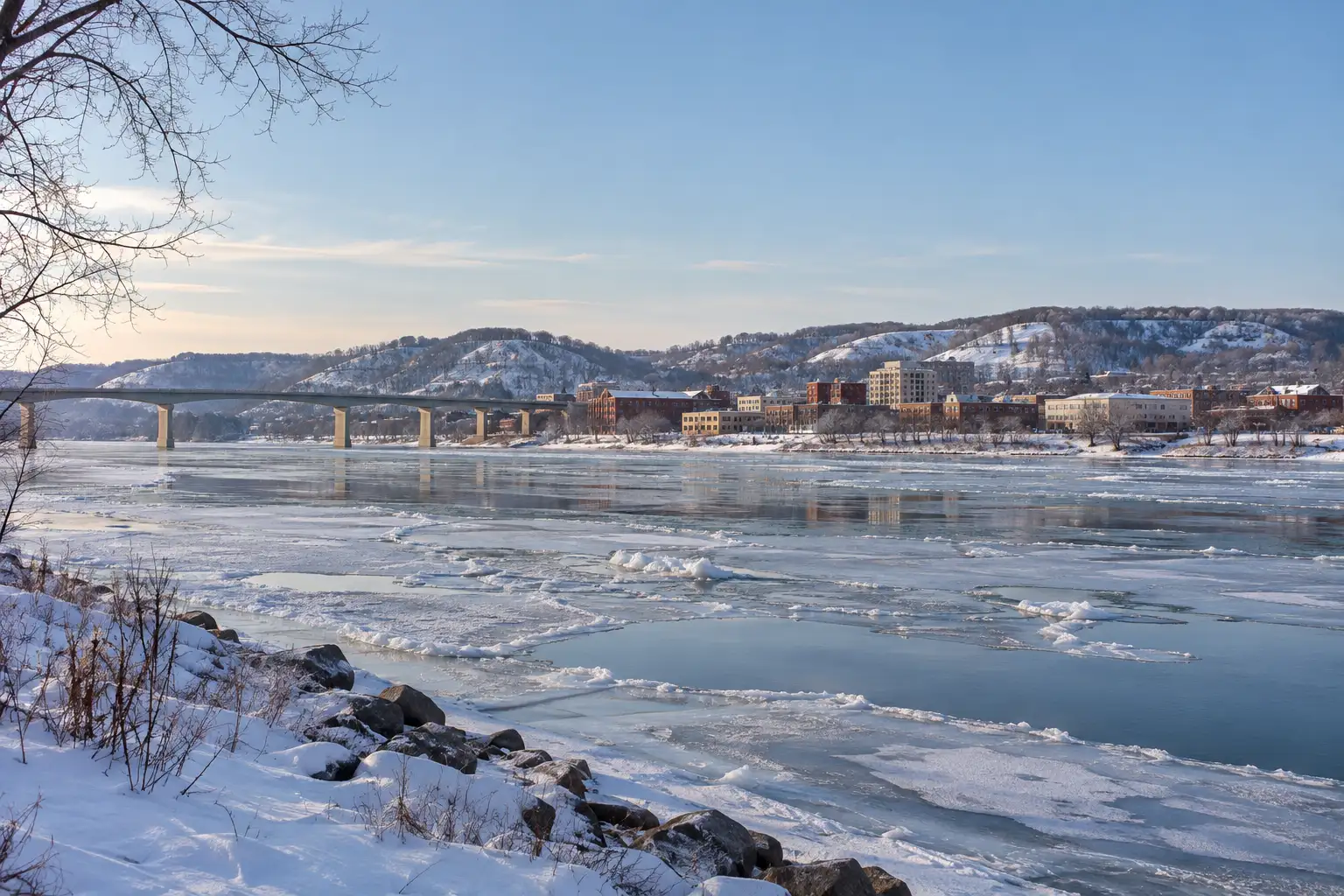
Sioux City sits where Iowa, Nebraska and South Dakota meet, on open river valley ground that the winter wind crosses without much to slow it down. That shapes the problems people call about.
Cold snaps push furnaces to their limit
When the overnight low drops below zero and the wind chill drops further, a furnace can run almost nonstop for days. That is exactly when a weak igniter, a tired inducer motor or a failing blower capacitor finally gives out. If your system has been making a new noise or taking longer to light, get it looked at before the next arctic front, not during it.
Drifting snow blocks high efficiency vents
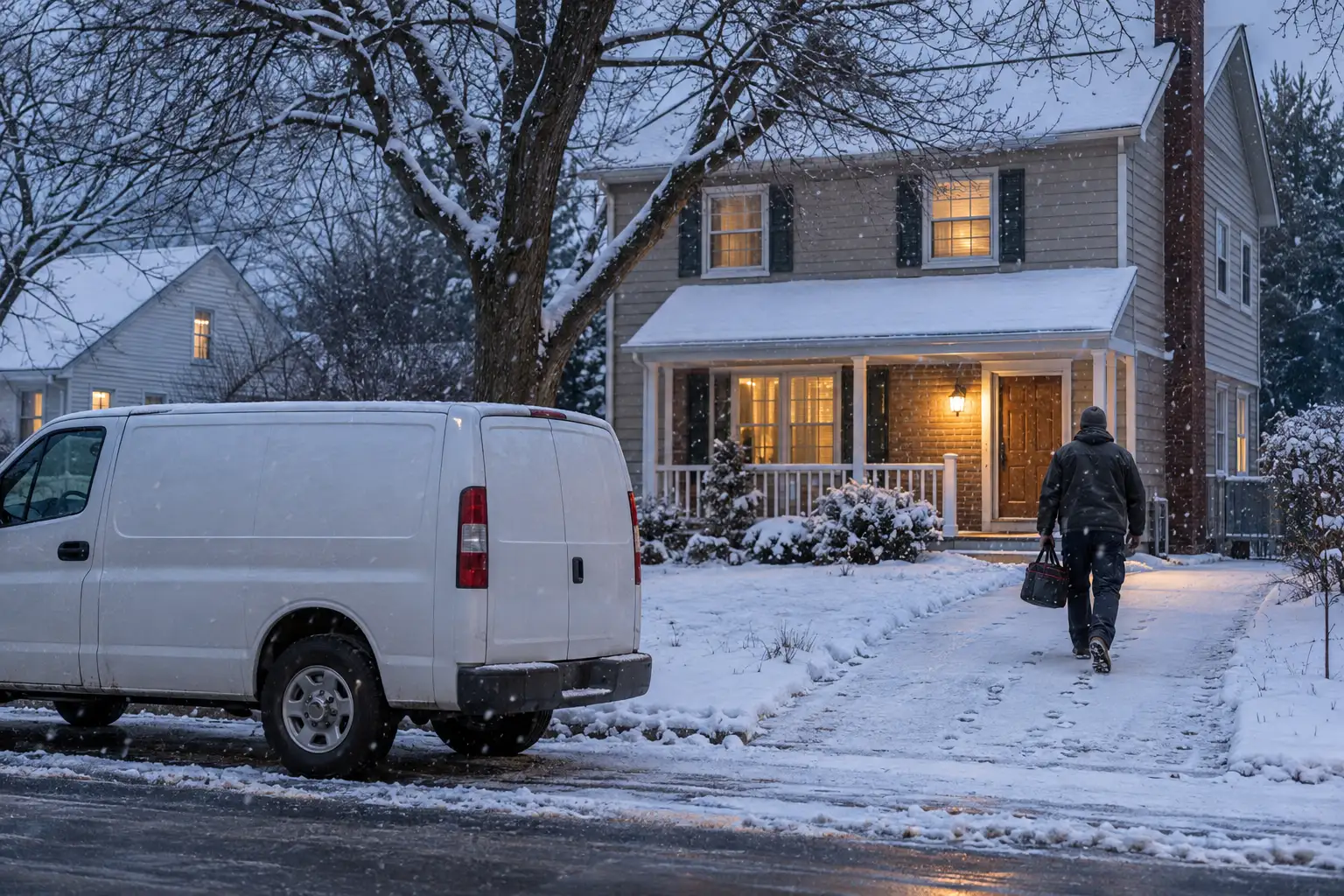
High efficiency furnaces vent through two plastic pipes on the side of the house, often low to the ground. Drifting snow and frost can plug them, the pressure switch trips, and the furnace locks itself out. Clearing the snow by hand is often the whole fix, and it is the first thing to check after a storm.
A lot of older houses, a lot of different equipment
Sioux City has a deep stock of older homes: big two stories on the Northside and Westside hills, bungalows, and postwar ranches in every direction. That means old boilers next to brand new furnaces, ductwork that was added decades after the house was built, and thermostats wired for systems long gone.
Dry air and furnace humidifiers
Cold outside air holds very little moisture, so heated indoor air gets dry. Many homes add a furnace mounted humidifier. Their pads, valves and water lines need attention each fall, and a stuck valve can leave water where you don’t want it.
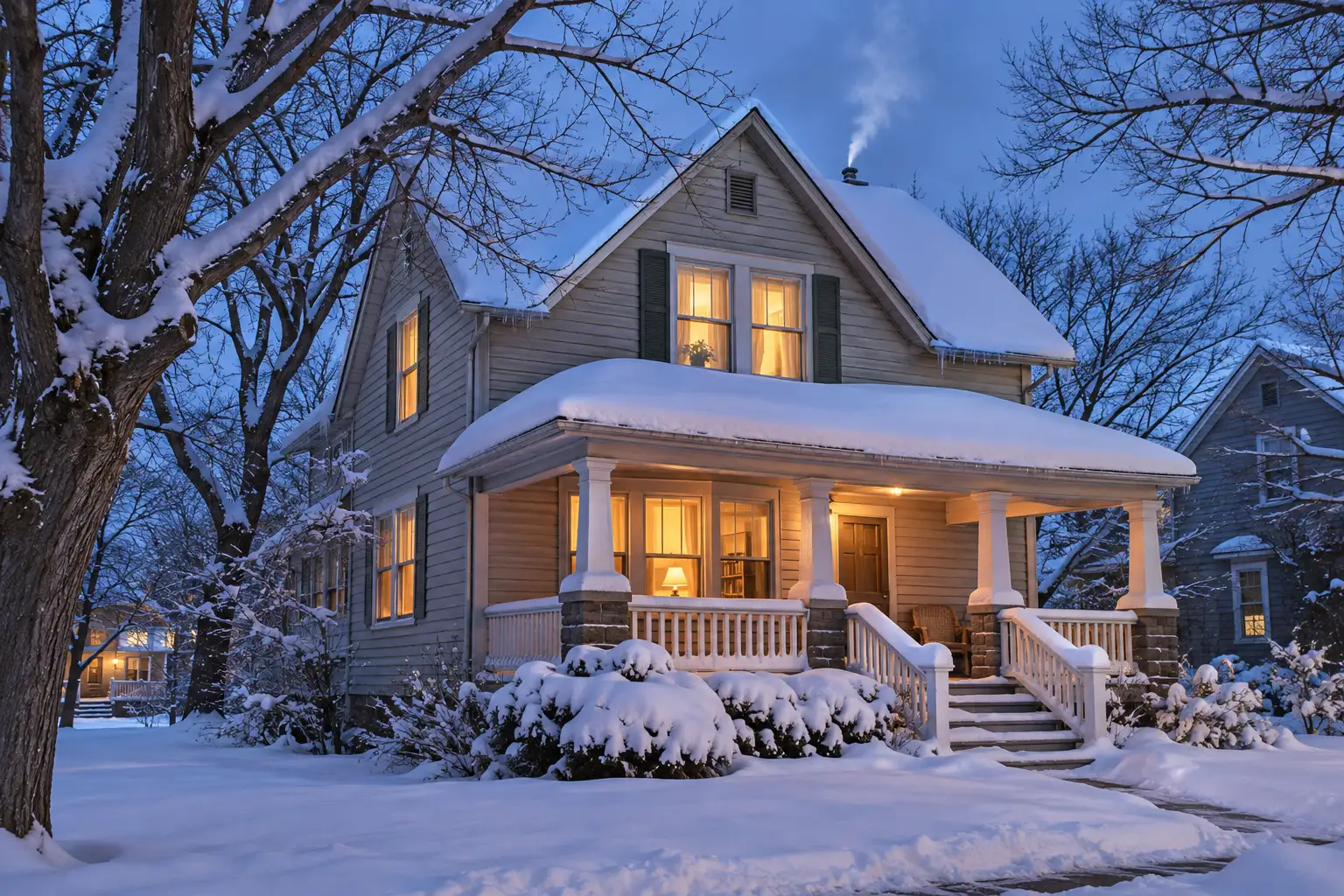
Emergency or can it wait?
Safety first, then comfort. Here’s how to sort what you’re seeing, and what to do in the next ten minutes.
| What you notice | Do this now | How urgent |
|---|---|---|
| Rotten egg gas smell | Get everyone out. Don’t touch switches. Call the gas utility or 911 from outside. | Right now |
| Carbon monoxide alarm sounding | Everyone (and pets) outside into fresh air, then call 911. | Right now |
| No heat and it’s below freezing | Check thermostat, breaker, filter and vent pipes. Open cabinet doors under sinks on outside walls. Then call. | Call today |
| Furnace starts and stops every few minutes | Replace a dirty filter and clear the outside vents. If it keeps cycling, call. | Call today |
| Heat pump encased in ice for hours | Clear snow from around the base. Don’t chip the ice. Call. | Call today |
| AC not cooling during a heat wave | If the copper line is iced, switch cooling off and run the fan. Check the filter. Call. | Call today |
| Water around the furnace or air handler | Mop up, check the condensate pump and drain line, keep electrical parts dry. | Soon |
| New noise, but the heat still works | Note when it happens (startup, running, shutdown) and call to book a visit. | Can wait a day |
For the full no heat and carbon monoxide checklist, see what to do when the heat goes out.
A year of heating and cooling in Siouxland
Deep winter
Furnaces and boilers run hardest. No heat calls spike during cold snaps and right after storms, when vent pipes drift shut. Keep a spare filter in the basement.
Thaw and swing season
Cold mornings, warm afternoons. Heat pumps switch back and forth. A good time to clean around the outdoor AC unit and have the cooling side checked.
Heat and humidity
Air conditioners work through long, muggy stretches. Clogged condensate drains, failed capacitors and low refrigerant show up first on the hottest days.
Before the first freeze
Furnace tune up season. Test the heat on a cool evening before you need it, change the filter and check the humidifier pad.
Five quick checks before you call
These won’t fix a broken part, but they solve a surprising number of “no heat” calls, and if they don’t help, you’ll have useful information for the technician.
- Thermostat: set to Heat (or Cool), set a few degrees past room temperature, and fresh batteries if it has them.
- Power: the furnace switch (it looks like a light switch on or near the unit, or at the top of the basement stairs) is on, and the breaker hasn’t tripped.
- Filter: a filter that’s grey and packed with dust can make a furnace overheat and shut itself off.
- Door panel: the front panel on the furnace presses a safety switch; if it’s loose, the furnace won’t run.
- Vent pipes: on a high efficiency furnace, the two plastic pipes outside are clear of snow and frost.
Stop and call instead if you smell gas, see scorch marks, hear a loud bang when the burners light, or the same breaker trips twice.

Every part of Sioux City, one number
HVAC Sioux City is about one city and nothing else. From Riverside along the Big Sioux to Morningside on the southeast side, from the old houses on the Northside hills to Leeds, the Westside and downtown, if you live in Sioux City, we cover your street.
- Morningside
- Northside
- Westside
- Riverside
- Leeds
- Downtown
Older two stories with boilers on the Northside and Westside hills, bungalows and postwar ranches across Morningside, newer homes with heat pumps at the edges of town: every kind of Sioux City house, one number. Not sure your address is inside the city? Call and ask.
Questions Sioux City homeowners ask
Do you handle both heating and cooling?
Yes. HVAC Sioux City covers the whole system: gas furnaces, boilers and radiators, heat pumps, central air conditioners and ductless mini splits. In winter most calls are about furnaces and no heat situations; from June through August it is mostly air conditioners that will not cool. One number covers all of it.
Is it free to call?
Yes, calling is free. Tell us what your system is doing and where you are, and we will arrange for a licensed local technician to come out. Anything about the repair itself is something you go over with the technician before work starts.
Which parts of Sioux City do you cover?
All of Sioux City: Morningside, the Northside, Riverside, Leeds, the Westside, downtown and the newer streets out toward the edges of town. Not sure your address is inside the city limits? Call and ask.
My furnace is blowing cold air. What should I check first?
Make sure the thermostat is set to Heat and the fan is on Auto, not On. Then check the furnace filter, the power switch near the furnace and the breaker. On a high efficiency furnace, walk outside and make sure the two plastic vent pipes are not packed with snow or frost. If none of that brings the heat back, call: it is usually an ignition or flame sensing problem a technician can sort out. More on the furnace repair page.
What should I do if I smell gas?
Leave the house first. Do not switch lights on or off, do not use the thermostat and do not try to find the leak. Once you are outside, call your gas utility’s emergency number or 911. A gas smell is a utility emergency before it is a furnace repair. After the utility has made the house safe, call us to get the furnace looked at. Our emergency page walks through it step by step.
My heat pump is covered in ice. Is that normal?
A thin layer of frost in cold, damp weather is normal, and the unit should clear it on its own during a defrost cycle. A thick shell of ice that stays for hours, or ice building up on the top and sides, is not. Clear snow away from the base, never chip at the ice, and call. See heat pump repair.
Do you work on boilers and radiators?
Yes. Plenty of older Sioux City homes still heat with hot water boilers and cast iron radiators or baseboard. Cold radiators, banging pipes, a pressure gauge that reads high or low, and boilers that lock out are all things a hot water heating technician can handle. Details on the boiler repair page.
How often should a furnace be checked?
Once a year is the standard advice, ideally in early fall before the heating season gets going. A yearly check catches worn igniters, dirty flame sensors, cracked vent pipes and weak blower parts while it is still warm enough to wait a day. Change or check the filter every one to three months on top of that. See furnace tune ups.
What should I have ready when I call?
Your address, what the system is doing (or not doing), any flashing light codes on the furnace control board, roughly how old the equipment is if you know, and when it started. If you can, note the brand and whether it is a furnace, boiler or heat pump. None of it is required: just tell us what you see.
Are the technicians licensed?
Yes. Heating and cooling work is a licensed trade in Iowa, and the technicians who come out when you call HVAC Sioux City are licensed local heating and cooling technicians. If you would like to see a license, ask the technician when they arrive.
Still have a question? Call (555) 010-0142 or browse the full FAQ. Want to know more about us? Read how HVAC Sioux City works or get in touch.