Furnace won’t light, blows cold, or keeps shutting off? Call HVAC Sioux City and a licensed local heating technician can come out, find the failed part and get the heat back on.
Furnace repair in Sioux City: what to do first
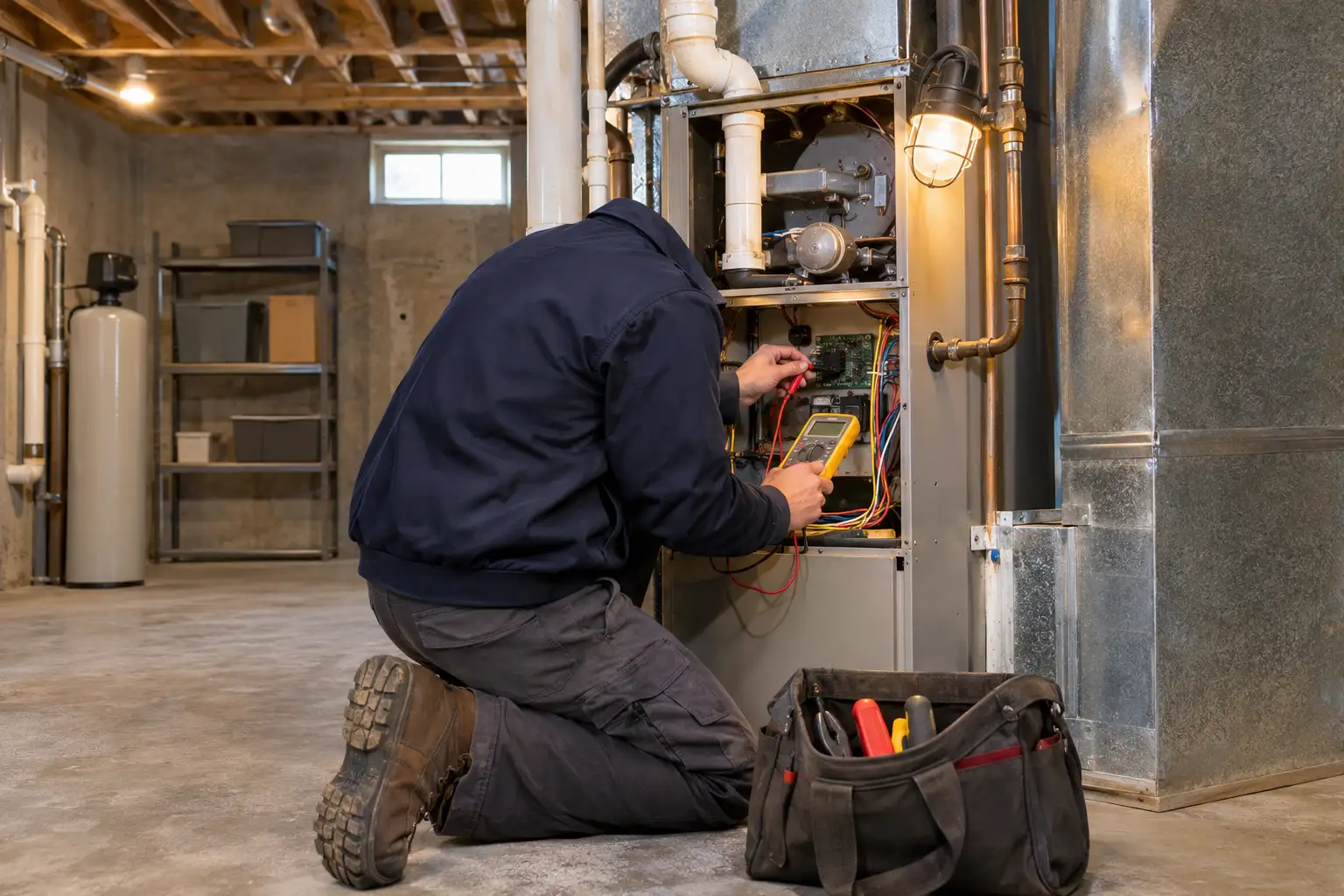
If your furnace has stopped heating, you have two jobs: keep the house safe and warm in the meantime, and get a technician looking at the right problem. Most failures come down to a handful of parts, and a few two minute checks rule out the simple stuff before anyone comes out.
- Thermostat on Heat, set several degrees above room temperature, fresh batteries.
- Furnace power switch on, breaker not tripped.
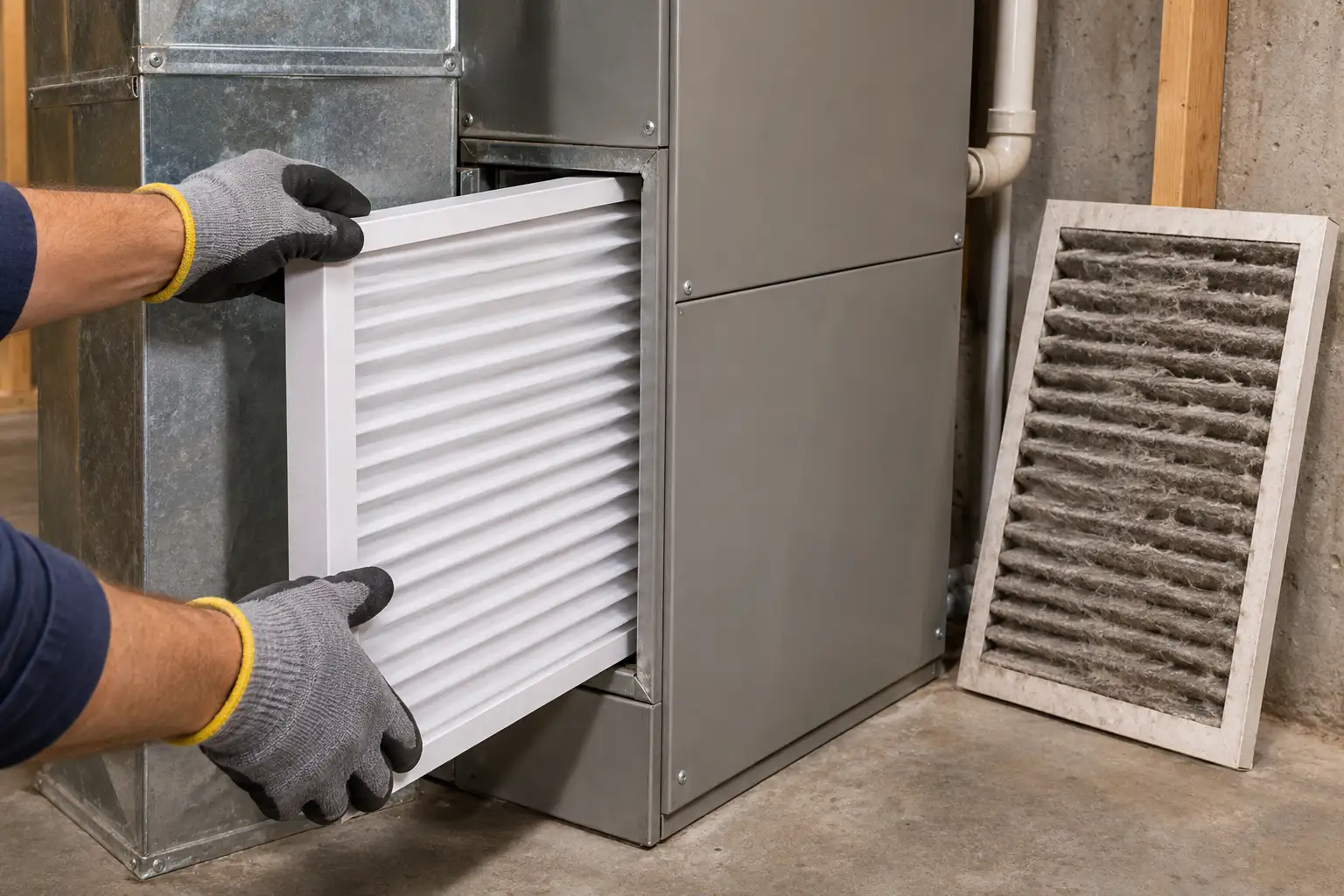
- Filter not packed with dust; furnace door panel firmly in place.
- High efficiency furnace: both plastic pipes outside clear of snow and frost.
- Look through the little window in the lower door and write down any blinking light pattern before you touch the power.
Still no heat? That’s when to call. Furnace repair in Sioux City is busiest in exactly the conditions you’re probably dealing with (a cold night, a furnace that’s been running hard), so calling early gives you the best shot at a quick visit.

What furnace repair covers
These are the repairs a heating technician handles on gas forced air furnaces, from older standard efficiency units to high efficiency condensing models.
Ignition
Hot surface igniters that crack or weaken, spark igniters, and older standing pilots that won’t stay lit.
Flame sensing
Cleaning or replacing the flame sensor, checking the ground and the burner flame so the furnace stops shutting off.
Draft & venting
Inducer motors, pressure switches, cracked or sagging vent pipe, blocked intake and exhaust, condensate traps.
Blower & airflow
Blower motors, run capacitors, belts on older units, high limit switches that trip from overheating.
Controls & wiring
Control boards, transformers, door switches, fuses on the board, thermostat wiring and thermostat replacement.
Safety checks
Gas valve operation, heat exchanger inspection, combustion and carbon monoxide checks after the repair.
Boiler, heat pump or mini split instead of a furnace? See boiler & hot water heat, heat pump repair or mini split repair.
Signs your furnace needs repair
Some of these mean “call today.” Others mean “call this week, before it becomes a no heat night.”
Call today
- No heat at all and the house is dropping below the mid 60s.
- The burners light, then shut off within a few seconds: over and over.
- A blinking code and the furnace won’t restart after one reset.
- The blower runs constantly but the air is cold.
- A burning electrical smell, or a breaker that trips again after you reset it.
- A loud boom or rumble when the burners light (delayed ignition).
Call soon
- The furnace takes several tries to light.
- Short cycling: on for a couple of minutes, off, on again.
- New squealing, grinding, rattling or humming from the cabinet.
- Some rooms are much colder than they used to be.
- Water around a high efficiency furnace.
- A yellow, lazy or flickering burner flame instead of a steady blue one.
What usually causes a furnace to quit
A furnace runs a strict sequence every time it starts: the thermostat calls, the inducer motor clears the flue, a pressure switch proves the draft, the igniter heats up, the gas valve opens, the flame sensor proves the flame, and the blower starts. When any step fails, the furnace stops. Here are the weak links we see most in Sioux City homes.
Dirty flame sensor
A thin metal rod that sits in the burner flame. Over a season or two it picks up a coating that weakens its signal, and the furnace shuts down seconds after lighting. Cleaning fixes it short term; a technician also checks why it fouled.
Cracked or worn igniter
Hot surface igniters are brittle and wear out with use. The longer and harder a furnace runs, like during a week of below zero nights, the more likely an igniter is to fail.
Blocked venting and the pressure switch
On high efficiency furnaces, snow, ice, a bird’s nest or a sagging pipe that traps condensate can block the draft. The pressure switch won’t close and the furnace never lights. It’s one of the most common calls after a Siouxland blizzard.
Overheating from poor airflow
A clogged filter, closed registers or a failing blower lets heat build up in the cabinet until the high limit switch shuts the burners off. The furnace cools down, restarts and repeats: that’s short cycling.
Electrical parts
Run capacitors for the blower, transformers, door switches and control boards all fail eventually. Power surges during summer storms sometimes leave a damaged board that only shows up when the heat is first needed in fall.
Emergency or can it wait until morning?
A furnace problem is rarely dangerous by itself, but a cold house in January can turn into frozen pipes, and some symptoms are safety issues first.
| Situation | What it means | What to do |
|---|---|---|
| Gas smell or CO alarm | Safety emergency | Get out, then call the gas utility or 911 from outside. Furnace repair comes after. |
| No heat, subzero night | Urgent: pipes can freeze | Call now. Open cabinet doors under sinks, let faucets on outside walls drip. |
| No heat, mild day | Urgent but manageable | Call today. Close blinds at dusk, keep interior doors open. |
| Short cycling, house still warm | Repair needed soon | Change the filter, clear vents, call to book. |
| Odd noise, heat works | Early warning | Note when it happens and call this week. |
Waiting on a technician? Space heaters need three feet of clearance from anything that burns and should plug straight into a wall outlet, never an extension cord. Never heat the house with a gas oven or a grill.
What the furnace repair visit includes
Testing first, parts second. Here is how a typical furnace repair in Sioux City runs.
Listen and look
The technician asks what happened, reads the fault code and checks the basics (thermostat, power, filter, venting), so nothing simple gets missed.
Test the sequence
They run the furnace through its startup and measure each step: inducer, pressure switch, igniter, gas valve, flame signal, blower. The step that fails points to the part.
Repair and prove it
After explaining the fix and doing the repair, they run several full heating cycles and check the flame, temperature rise and venting before calling it done.
Keeping your furnace out of trouble
Most furnace repair calls in Sioux City could have been a few weeks later, or never, with a little attention. None of this needs tools.
- Filters: check monthly in winter; replace one inch filters every one to three months.
- After every snowfall: walk outside and clear around the intake and exhaust pipes.
- Keep it clear: no boxes, laundry or paint cans against the furnace or water heater.
- Registers open: closing vents in unused rooms raises pressure and makes the furnace work harder.
- Test in September: run the heat on a cool evening so problems show up before you need it.
- Yearly check: a furnace tune up cleans the burners and sensor and tests the safety controls.
- CO alarms: test them monthly and replace them at the age the manufacturer lists.
Furnace repair in Sioux City, by type of furnace
The furnace in your basement changes what usually breaks. Here is what to expect from each common type.
Standard efficiency
Older gas furnaces that vent into a metal flue or chimney. Common calls: worn igniters or pilots, failing draft inducers, cracked flue pipe and heat exchangers that need a careful look as the furnace ages.
High efficiency
Condensing furnaces with two white plastic pipes. They squeeze extra heat out of the exhaust and make water as they run, so drains, traps, condensate pumps and snow blocked vents are the usual suspects.
Two stage and variable speed
Quieter furnaces that run longer at low fire. Their electronic blower motors and more complex control boards need a technician who reads the diagnostics instead of guessing.
Furnace with central air
The indoor AC coil sits on top of the furnace and shares its blower. A clogged coil or a summer drain problem can show up as a winter airflow complaint.
Whatever kind you have, furnace repair in Sioux City starts the same way: tell us the type if you know it, the blinking light pattern and what the furnace did right before it stopped. That gets the right technician out with the right parts in mind.
Furnace repair questions
Why does my furnace light and then shut off after a few seconds?
That pattern almost always points to flame sensing. The furnace lights, the control board looks for a signal from the flame sensor, does not get one, and shuts the gas off for safety. A sensor coated in residue is the most common reason; a poor ground or a weak burner flame are others. After three or so tries the board locks out and you will see a flashing code. A technician cleans or replaces the sensor and checks why it fouled.
What do the flashing lights on my furnace mean?
Most modern furnaces have a small LED on the control board, visible through a window in the lower door. It blinks a pattern (say, three flashes, a pause, three flashes) that maps to a fault listed on a sticker inside the door. Write the pattern down before you turn the power off, because resetting the furnace clears it. It is the single most useful thing you can tell us when you call.
Is it safe to keep resetting my furnace?
Once or twice, yes: switch the power off for about thirty seconds and back on. If it locks out again, stop. Repeated resets can send unburned gas into the combustion chamber on furnaces with ignition problems, and they hide the pattern a technician needs to see. Leave it off, keep the house as warm as you safely can, and call.
My furnace runs but the house never reaches the thermostat setting. Why?
Start with the filter and the registers: a clogged filter or closed vents starve the system of airflow. Beyond that, a furnace that runs and runs can have a weak burner flame, a failing blower motor, leaky ductwork in an unheated space, or simply be undersized for a cold snap. A technician measures the temperature rise across the furnace and the airflow to tell which one it is.
Can a furnace problem cause carbon monoxide?
It can. A cracked heat exchanger, a blocked flue or vent pipe, or a burner that is badly out of adjustment can all let carbon monoxide into the home. That is why every home with a gas furnace should have working CO alarms near the bedrooms. If an alarm sounds, get everyone outside and call 911 before anything else. Read the emergency page for the full steps.
How long does a typical furnace repair take?
Many common repairs (an igniter, a flame sensor, a pressure switch, a capacitor) are finished during the same visit once the part is in hand. Larger jobs such as an inducer motor, blower motor or control board can depend on getting the exact part for your model. The technician will tell you what the repair involves before starting.
Do you work on all furnace brands?
Yes. Gas furnaces share the same basic parts (igniter, flame sensor, inducer, pressure switch, gas valve, blower, control board) whatever name is on the cabinet. Technicians work on the standard residential brands found in Sioux City homes, older 80% furnaces and high efficiency condensing models alike.
Should I repair or replace an old furnace?
That depends on the age of the furnace, the condition of the heat exchanger, how often it has needed work and how comfortable the house has been. A single failed part on a sound furnace is usually worth repairing. A cracked heat exchanger is a different conversation. Ask the technician for an honest read on the furnace’s overall condition while they are there.
Didn’t see your question? Call (555) 010-0142 and describe what the furnace is doing, or read the full FAQ.
Related services
Furnace problems often overlap with these.
- No HeatThe house is getting colder and nothing you try brings the heat back.
- Furnace Tune UpA full check and cleaning before the first hard freeze, or midwinter if it is acting up.
- Heat Pump RepairIced over outdoor unit, lukewarm air, or backup heat running nonstop.
- Boiler & Hot Water HeatCold radiators, banging pipes, low pressure or a boiler that keeps shutting down.