Central air that won’t start, trips the breaker, buzzes or leaks water? Call HVAC Sioux City and a licensed local cooling technician can come out.
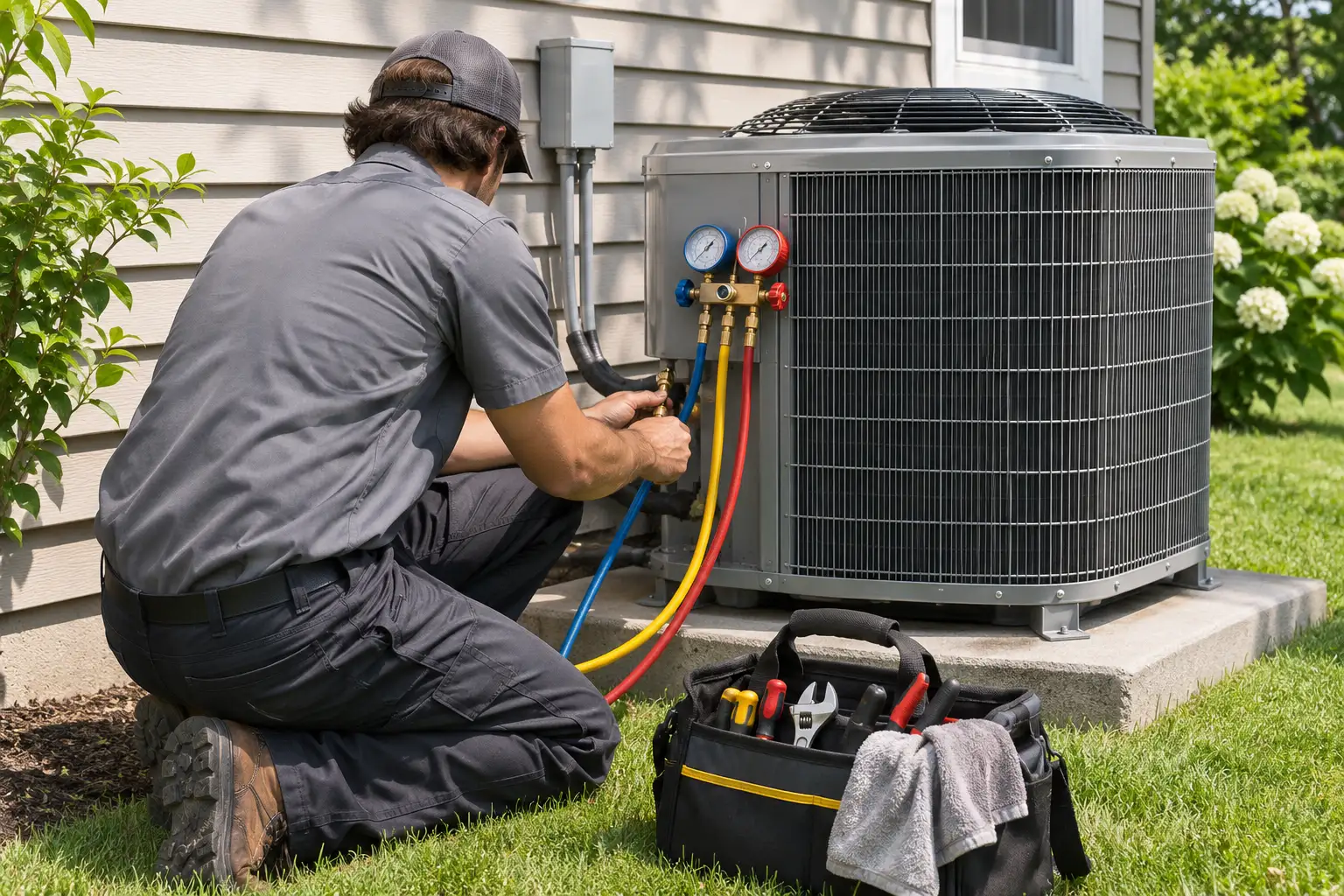
AC repair in Sioux City: start here
When the air conditioning quits on a ninety degree afternoon, the house heats up fast, especially upstairs. Before you call, two minutes of checks can save you a visit:
- Thermostat on Cool, set a few degrees below room temperature, fan on Auto.
- Breakers for both the furnace (or air handler) and the outdoor unit are on.
- The furnace switch is on: the indoor blower needs power for the AC to run.
- The filter isn’t clogged.
- Water isn’t pooled around the furnace (a full drain can shut the AC off).
If those check out and the AC still won’t run or cool, call. Most AC repair in Sioux City comes down to a short list of parts a technician can test quickly, and summer’s first heat wave is when everyone else calls too.
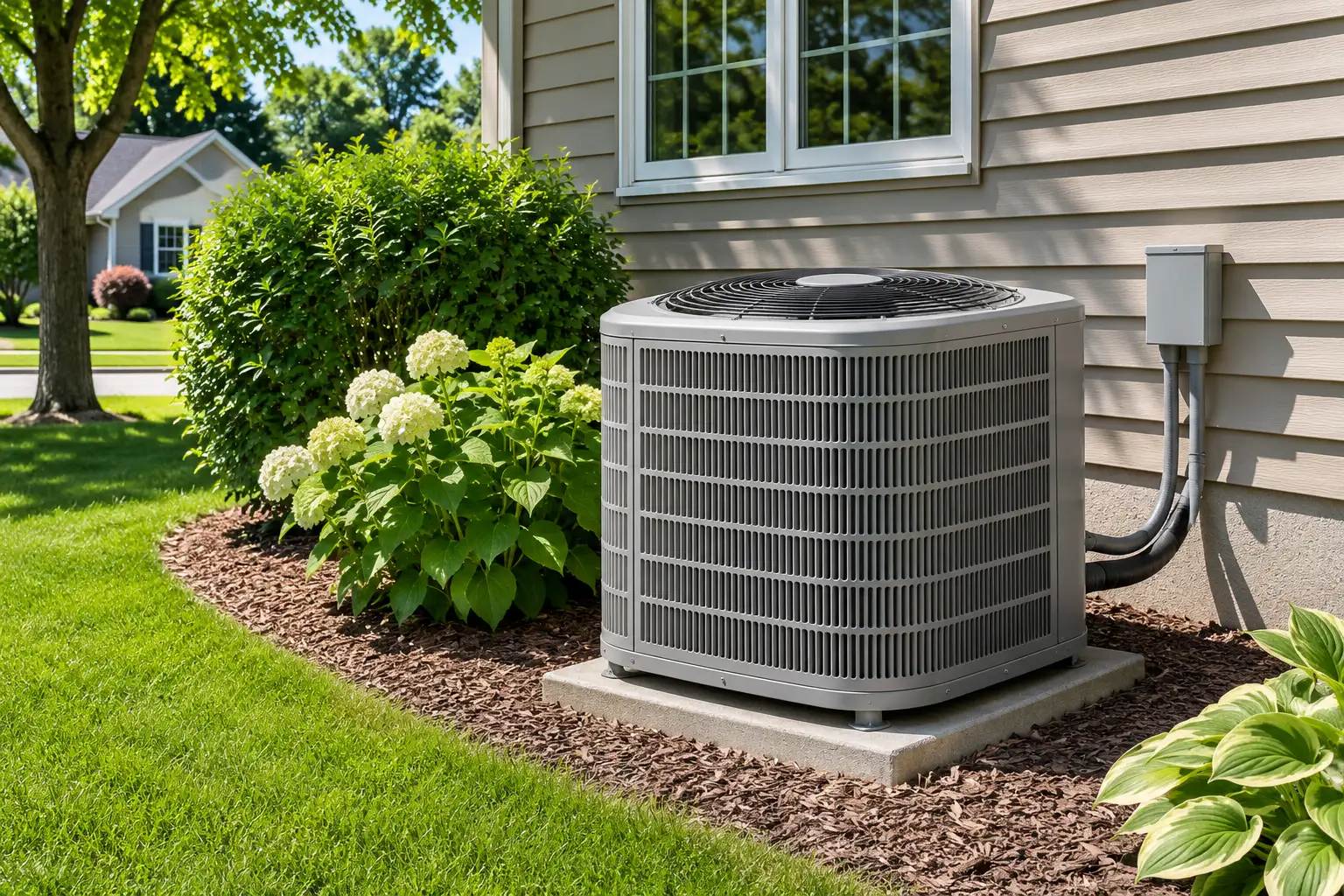
What AC repair covers
Electrical
Run capacitors, contactors, disconnects, fuses and wiring in the outdoor unit; thermostat and low voltage wiring.
Motors
Outdoor fan motors and blades, indoor blower motors and blower capacitors.
Refrigerant
Leak checks, repairs on accessible leaks, recharge to the manufacturer’s specification.
Coils
Frozen evaporator coils, dirty or damaged condenser coils, coil cleaning.
Drainage
Clogged condensate lines, failed condensate pumps, float switches, overflowing drain pans.
Compressor
Hard start problems, overheating, and diagnosing a compressor that won’t run.
Signs your air conditioner needs repair
| What you notice | Common cause | What to do now |
|---|---|---|
| Outdoor unit silent | Tripped breaker, contactor, thermostat | Check breakers once; call if it doesn’t start |
| Humming, fan not spinning | Failed capacitor or fan motor | Turn the AC off; call |
| Ice on the copper line | Low airflow or low refrigerant | Cool off, fan on to thaw; call |
| Water near the furnace | Clogged drain, failed pump | Mop up, keep wiring dry; call |
| Breaker trips repeatedly | Compressor, motor or wiring fault | Leave it off; call |
| Burning smell | Overheating motor or wiring | Shut it off at the breaker; call |
What the AC repair visit includes
Check the basics
Thermostat, power, filter and drainage, plus a look at the outdoor unit for obvious damage or debris.
Test and measure
Capacitors, contactor and motors are tested; refrigerant pressures and temperatures are measured to judge the charge and airflow.
Repair and confirm
The technician explains the repair, fixes it, and confirms cold air at the registers and a working drain before leaving.
Keeping your AC running all summer
- Check the filter monthly from June through August.
- Hose cottonwood fluff and grass clippings off the outdoor coil.
- Keep plants, fences and grills at least two feet from the condenser.
- Don’t set the thermostat dramatically low: it won’t cool faster and can freeze the coil.
- Keep blinds closed on sunny west facing windows in the afternoon.
- Have the system checked in spring, before the first long hot stretch.
House running warm but the AC is on? See AC not cooling for a deeper look at that problem.
AC repair in Sioux City: what changes with older systems
Many Sioux City homes still cool with a central air system that is well into its second decade. Older systems can be repaired just like new ones, but a few things are worth knowing.
- Some older units use a refrigerant that is no longer produced, which affects what a leak repair involves. The technician will explain the options.
- Matching a new part to an older outdoor unit and indoor coil matters; the wrong combination cools poorly.
- An older system that needs one electrical part is often worth fixing. One with a failing compressor and a leaking coil is a bigger conversation.
Questions worth asking the technician
- What failed, and why did it fail?
- Is anything else close to failing that I should know about?
- What refrigerant does my system use, and is the charge correct?
- Is the indoor coil clean and draining properly?
Good answers to those four questions tell you a lot about how many summers your system has left, and help you plan instead of being surprised in July.
AC repair questions
My outdoor AC unit hums but the fan does not spin. What is wrong?
That is the classic sign of a failed run capacitor, the part that gives the fan motor and compressor their starting kick. It is one of the most common summer AC repairs. Turn the system off at the thermostat so the compressor is not straining, and call. Do not poke the fan to start it: the capacitor holds a charge.
Why does my AC keep tripping the breaker?
A breaker that trips once on a scorching afternoon can be a fluke. If it trips again after a reset, something is drawing too much current: a failing compressor, a shorted fan motor, a bad capacitor or a wiring fault. Leave it off and call: repeated resets can damage the compressor.
Why is there water around my furnace in the summer?
Your air conditioner pulls a lot of water out of humid Iowa air, and it drains through a condensate line, sometimes with a small pump. When the line clogs with algae or the pump fails, water backs up and spills. Many systems have a float switch that shuts the AC off to prevent a flood, which can look like a dead air conditioner.
There is ice on the copper line going into my house. Is that bad?
Yes: it means the indoor coil is freezing, usually from low airflow (a dirty filter or weak blower) or low refrigerant. Switch the thermostat from Cool to Off and the fan to On to thaw it, replace the filter if it is dirty, and call. Running it frozen can damage the compressor.
Is it worth repairing an older central air conditioner?
Often, yes. Many summer failures are electrical parts on an otherwise healthy system. Bigger repairs on an older unit that uses an outdated refrigerant are a different decision. Ask the technician for a straight answer on the overall condition of the system once they have diagnosed it.
How do I reset my air conditioner?
Turn the thermostat to Off, switch off the breaker for the outdoor unit (and the disconnect box next to it, if there is one) for about five minutes, then turn everything back on and set the thermostat to Cool. Some thermostats delay the restart for a few minutes. If it does not come back, call.
Need help now? Call (555) 010-0142