Furnace, boiler or heat pump, when the heat quits in an Iowa winter, call HVAC Sioux City. Tell us what’s going on and a licensed local heating technician can come out.
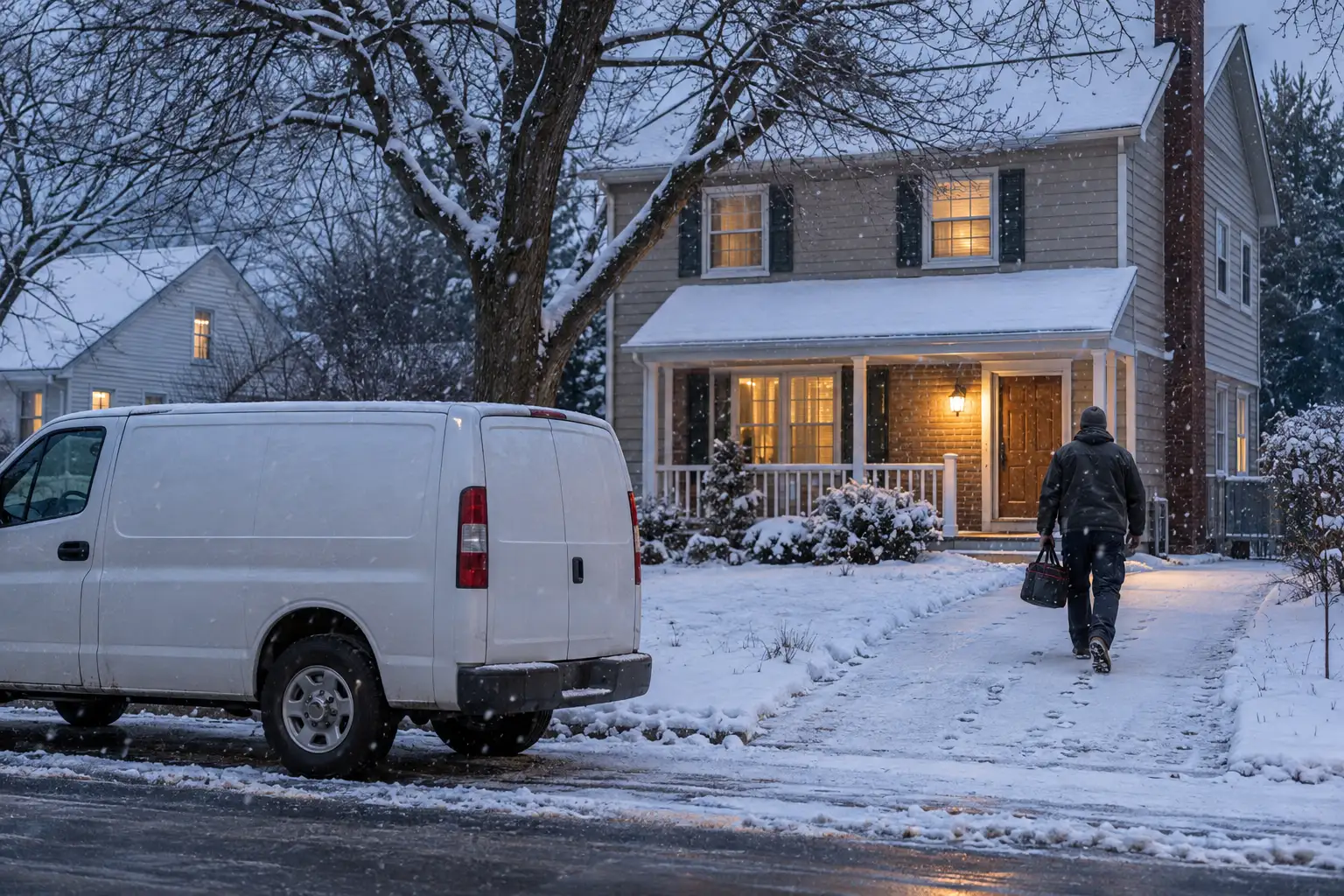
Heating repair in Sioux City for every kind of system
Sioux City’s housing runs from Victorian era two stories to brand new builds, and the heating equipment varies just as much. Start with the page that matches your problem.
Furnace Repair
Gas furnace not lighting, blowing cold, cycling off or locked out with a flashing light.
Read more →No Heat
The house is getting colder and nothing you try brings the heat back.
Read more →Heat Pump Repair
Iced over outdoor unit, lukewarm air, or backup heat running nonstop.
Read more →Boiler & Hot Water Heat
Cold radiators, banging pipes, low pressure or a boiler that keeps shutting down.
Read more →Thermostat Repair
A blank screen, a system that ignores the setting, or a new thermostat that won’t talk to the furnace.
Read more →Furnace Tune Up
A full check and cleaning before the first hard freeze, or midwinter if it is acting up.
Read more →Heat out tonight?
What to do in the first hour: safety checks, keeping pipes from freezing, and when to call.
No heat checklist →
Which heating system do you have?
Knowing what’s in the basement helps you describe the problem, and helps the right technician come prepared.
| System | How to recognize it | Problems we hear about most |
|---|---|---|
| Gas furnace (standard) | Metal cabinet with ducts; vents into a metal flue or chimney | Igniter and flame sensor failures, blower motors, cracked flue pipe |
| High efficiency furnace | Two white plastic pipes running out the side wall or roof; a drain line | Snow blocked vents, pressure switch lockouts, clogged condensate traps |
| Hot water boiler | Pipes to radiators or baseboard; a pressure gauge and expansion tank | Cold radiators, air in lines, circulator pump failure, pressure issues |
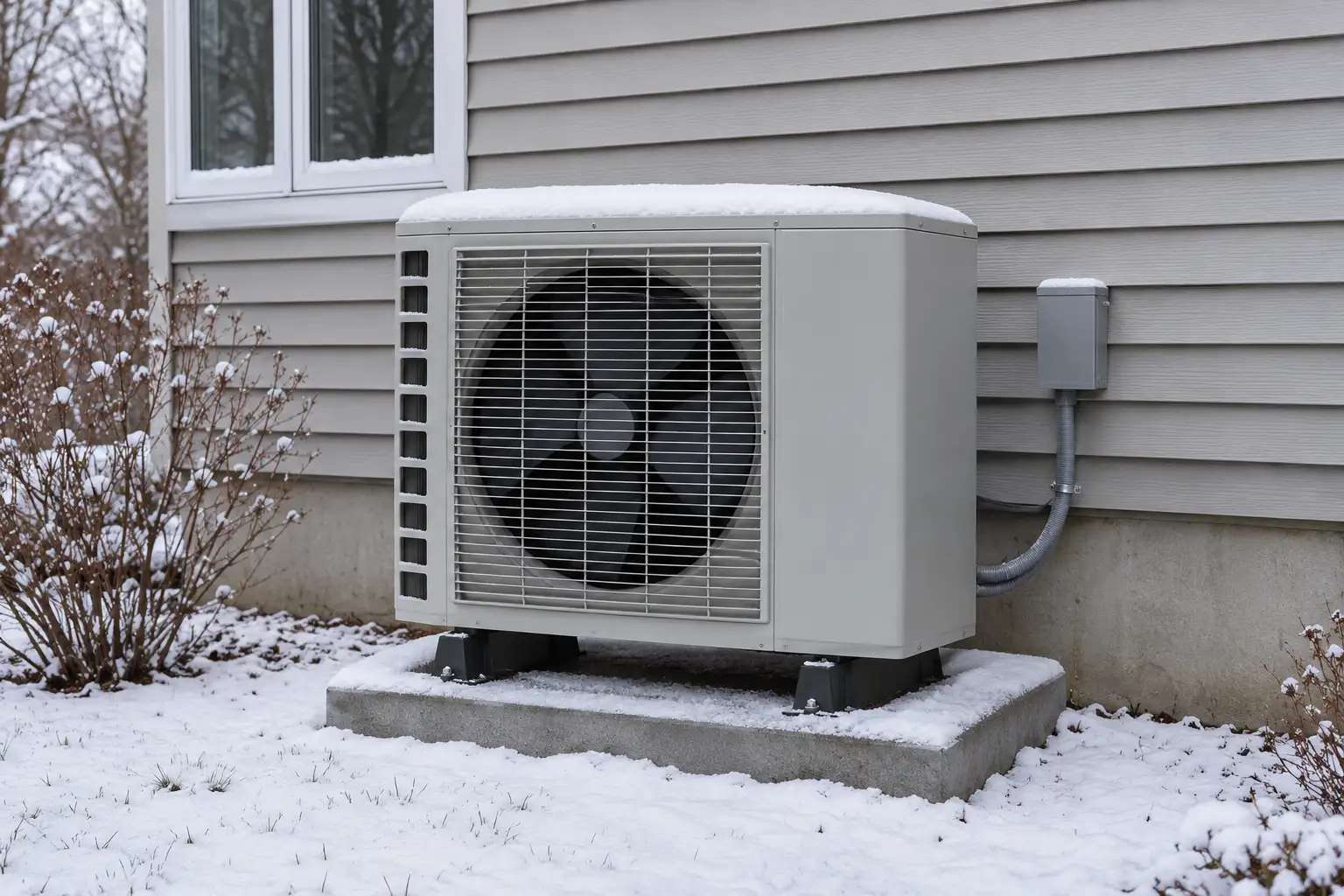
| Heat pump | Outdoor unit that runs in winter; indoor air handler or furnace backup | Ice buildup, defrost failure, backup heat running constantly |
| Ductless mini split | Wall mounted indoor heads, small outdoor unit, no ducts | Blinking error codes, weak heat in deep cold, drain leaks |
Why heating systems fail when it’s coldest
It’s not bad luck. In mild weather a furnace might run ten minutes an hour; during a Sioux City cold snap it can run most of the hour, every hour, for days. Every part that was close to failing (a cracked igniter, a bearing in the blower motor, a capacitor that has lost strength) gets pushed past the edge at once.
Weather adds its own trouble. Wind driven snow drifts against the side of the house and plugs the vent pipes of high efficiency furnaces. Heat pumps lose capacity as the temperature drops and lean on their backup heat. Boilers in older homes work against drafty windows and long pipe runs.
That’s why the most useful thing you can do is call at the first sign of trouble (a new noise, a furnace that takes two tries to light, rooms that feel cooler than usual) instead of waiting for it to stop on the worst night of the year.
Tip: keep a spare furnace filter and fresh thermostat batteries in the house from November on. Both are behind a surprising number of winter no heat calls.
Heating help through the season
What to watch for from the first cool night to the last frost.
First startup
A brief dusty smell the first time the heat runs is normal. A smell that lingers, a furnace that won’t light, or a boiler that won’t hold pressure is worth a call while it’s still mild.
Getting serious
Longer run times show up weak parts. Check the filter monthly and clear the outside vents after each snowfall.
Deep cold
Peak no heat season. If the heat goes out on a subzero night, protect your pipes and call right away: don’t wait for morning.
Swing weather
Heat pumps switch modes often; humidifiers should be shut off and drained. A good time to note what went wrong this winter.
What to tell us when you call about heat
You don’t need to know the technical names for anything. Describe what you see and hear, and these details help most:
- The type of system, if you know it: furnace, boiler, heat pump or mini split.
- What it’s doing: silent, humming, lighting and shutting off, blowing cold, banging.
- Any blinking light pattern or error code, written down before you reset anything.
- What you’ve already checked: thermostat, breaker, filter, vent pipes, boiler pressure.
- Whether anyone in the house is especially vulnerable to the cold.
Heating repair in Sioux City starts with safety
If you smell gas or a carbon monoxide alarm is sounding, leave the house and call the gas utility or 911 first. Once the house is safe, call us to get the system repaired. Our emergency page covers what to do in the first hour, including protecting your pipes and staying warm without risk.
For everything else, from a furnace that takes two tries to light to radiators that won’t warm up, a phone call is the right first step.
Heating repair questions
What kind of heating systems do you work on?
Gas forced air furnaces (standard and high efficiency), hot water boilers with radiators or baseboard, steam radiators in some of the oldest houses, air source heat pumps with electric or gas backup, and ductless mini splits used for heat. If it keeps a Sioux City house warm, a heating technician can look at it.
How do I know if I have a furnace or a boiler?
A furnace heats air and pushes it through ducts to floor or wall registers. A boiler heats water and sends it through pipes to radiators or baseboard units: no ducts involved. If you have metal radiators under the windows, you almost certainly have a boiler.
Can you fix my heat if the power is on but nothing happens?
Yes. A furnace or boiler that has power but will not start usually has a failed safety switch, igniter, control board or thermostat problem. Note any blinking lights on the control board and call: that code narrows things down fast. See no heat repair.
When is the best time to have my heating checked?
Early fall, before the first hard freeze. A yearly check catches worn parts while it is still mild enough that a repair can wait a day. More on the furnace tune up page.
Something else going on? Call (555) 010-0142. It’s free.
Cooling services
The same number covers your air conditioning in summer.