Cold radiators, banging pipes, a boiler that keeps locking out? Call HVAC Sioux City and a licensed local hot water heating technician can come out.
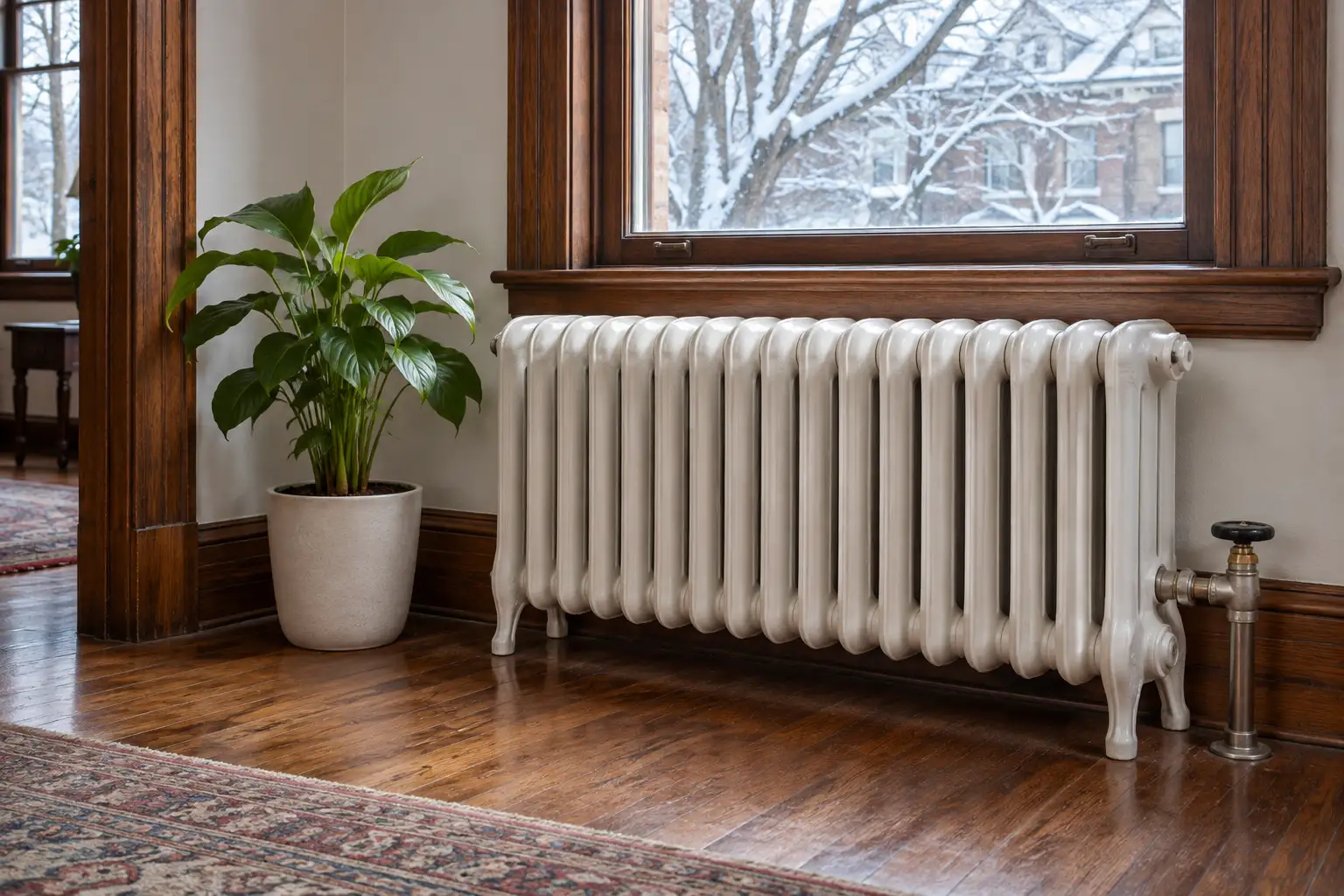
Hot water heat in Sioux City’s older homes
Walk through the Northside, the Westside or the blocks around Morningside University and you’ll find plenty of houses still heated the way they were built to be: a boiler in the basement and cast iron radiators under the windows. Some have been converted to modern high efficiency boilers with baseboard; a few still run on steam.
Hot water heat is quiet, even and long lived, when it works. When it doesn’t, the symptoms are specific: one cold radiator, a whole floor that won’t warm up, gurgling, banging, a pressure gauge that won’t stay put, or a boiler that fires and shuts down.
Boiler repair in Sioux City takes someone comfortable with circulators, expansion tanks, zone valves and low water cutoffs, not just furnaces. Tell us you have a boiler when you call so the right technician comes out.

What boiler and radiator repair covers
- Boilers that won’t fire, or fire and lock out
- Burners, igniters, flame sensors and gas valves
- Circulator pumps that hum, stick or run hot
- Zone valves and thermostats for each zone
- Expansion tanks and pressure problems
- Pressure relief valves that drip or discharge
- Automatic fill valves and backflow preventers
- Air removal: bleeding radiators, air separators and vents
- Low water cutoffs and limit controls
- Venting and condensate on high efficiency boilers
- Radiator valves and baseboard that won’t heat
- Steam boilers: water level, vents and pipe pitch
Common boiler problems and what causes them
| Symptom | Usual cause | Try first |
|---|---|---|
| One or two cold radiators | Trapped air, closed radiator valve | Bleed the radiator; open the valve fully |
| A whole floor or zone cold | Zone valve, zone thermostat, circulator | Check that zone’s thermostat, then call |
| Pressure keeps dropping | A leak in piping, a radiator or the boiler | Look for damp spots; call |
| Relief valve dripping | Waterlogged expansion tank, fill valve | Don’t plug it; call |
| Boiler fires, then shuts off | Flame sensing, venting, overheating from no circulation | Note any code; call |
| Gurgling or banging | Air in lines, expansion noise, water hammer | Bleed radiators; call if it continues |
How to bleed a radiator: with the heat on and the radiator warm at the bottom, hold a rag under the small valve at the top and turn it slowly with a radiator key. Air hisses out; close it as soon as a steady trickle of water appears. Then check the boiler pressure: bleeding several radiators can drop it.
Emergency or can it wait?
Call right away if the boiler is off on a below zero night, if water is pouring from the relief valve or a pipe, if you smell gas (leave first and call the utility), or if a carbon monoxide alarm sounds (get outside and call 911).
Call today if the pressure keeps dropping, if several radiators are cold, or if the boiler is short cycling.
It can wait a day or two if a single radiator is cold and bleeding it helped, or if there’s new noise but the house is warm.
What the boiler repair visit includes
Boiler repair in Sioux City is a little different from furnace work, so expect the technician to spend time on the whole loop, not just the boiler.
The technician checks the burner and controls, measures pressure and temperature, confirms water is actually circulating to each zone, tests the expansion tank and relief valve, and looks over the venting. After the repair, they run the boiler through full cycles and make sure every zone heats.
Keeping a boiler healthy
- Have it serviced every fall, before the first cold week.
- Glance at the pressure gauge once a week in winter so you notice changes.
- Keep furniture and heavy drapes off radiators so the heat can move.
- Never close every radiator valve in a room you’re not using in deep cold: pipes in outside walls can freeze.
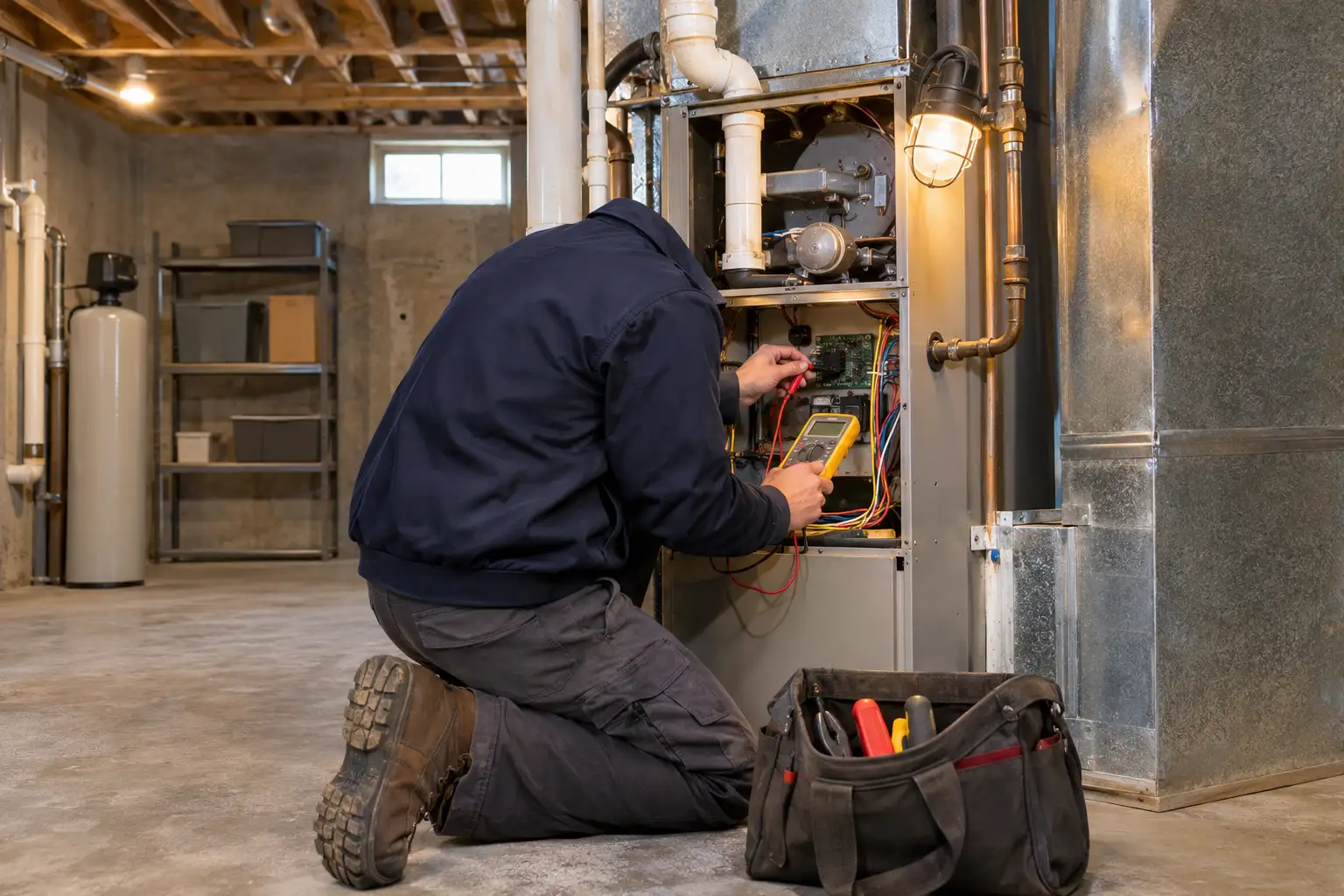
Hot water, steam and high efficiency boilers
Hot water boilers are the most common in Sioux City. They keep the system full of water under modest pressure and pump it through radiators or baseboard. Pressure, circulation and trapped air are where most problems start.
Steam boilers are found in some of the oldest houses. They boil water and send steam up through the pipes, and the water level in the boiler, the air vents on the radiators and the slope of the pipes all matter.
High efficiency boilers are compact, often wall hung, and vent through plastic pipe like a high efficiency furnace. They condense water from the exhaust, so their drains and vents need the same winter attention, and their electronic controls need someone who reads the fault history.
Whichever you have, boiler repair in Sioux City goes faster when you can tell us the type, what the pressure gauge reads and which rooms are cold.
Boiler and radiator questions
Why is one radiator cold when the rest are hot?
Trapped air is the usual reason. Air collects at the high point of the radiator and keeps hot water from filling it. Bleeding the radiator, opening the small valve at the top with a radiator key until water appears, often fixes it. If it keeps happening, or several radiators go cold, the boiler may have a pressure, circulation or zone valve problem.
What should my boiler pressure gauge read?
Most residential hot water boilers run somewhere around 12 to 20 psi when cold and a bit higher when hot, but the right range depends on the house and the boiler: many gauges are marked. Pressure that drops again and again points to a leak; pressure that climbs toward the relief valve setting points to an expansion tank or fill valve problem. Both are worth a call.
Is water dripping from the pipe on the side of my boiler dangerous?
That pipe usually comes from the pressure relief valve, a safety device that opens when pressure gets too high. A drip means something is pushing pressure up: often a waterlogged expansion tank or a fill valve letting in too much water. Do not cap or plug the pipe. Call so a technician can find the cause.
Why do my pipes bang when the heat comes on?
In hot water systems, banging usually comes from air in the lines, pipes expanding against hangers or floor joists, or water hammer when zone valves snap shut. In older steam systems, it often means pipes have lost their pitch and are holding water. A technician can tell which by listening to when it happens.
Do you work on old steam systems too?
Yes. Some of the oldest homes in Sioux City still have one pipe or two pipe steam. Steam systems need someone who understands water level, venting and pipe pitch: tell us it is steam when you call so the right technician comes out.
Questions about your hot water heat? Call (555) 010-0142