A once a year check before the cold arrives. Call HVAC Sioux City to have a licensed local technician clean, test and adjust your furnace.
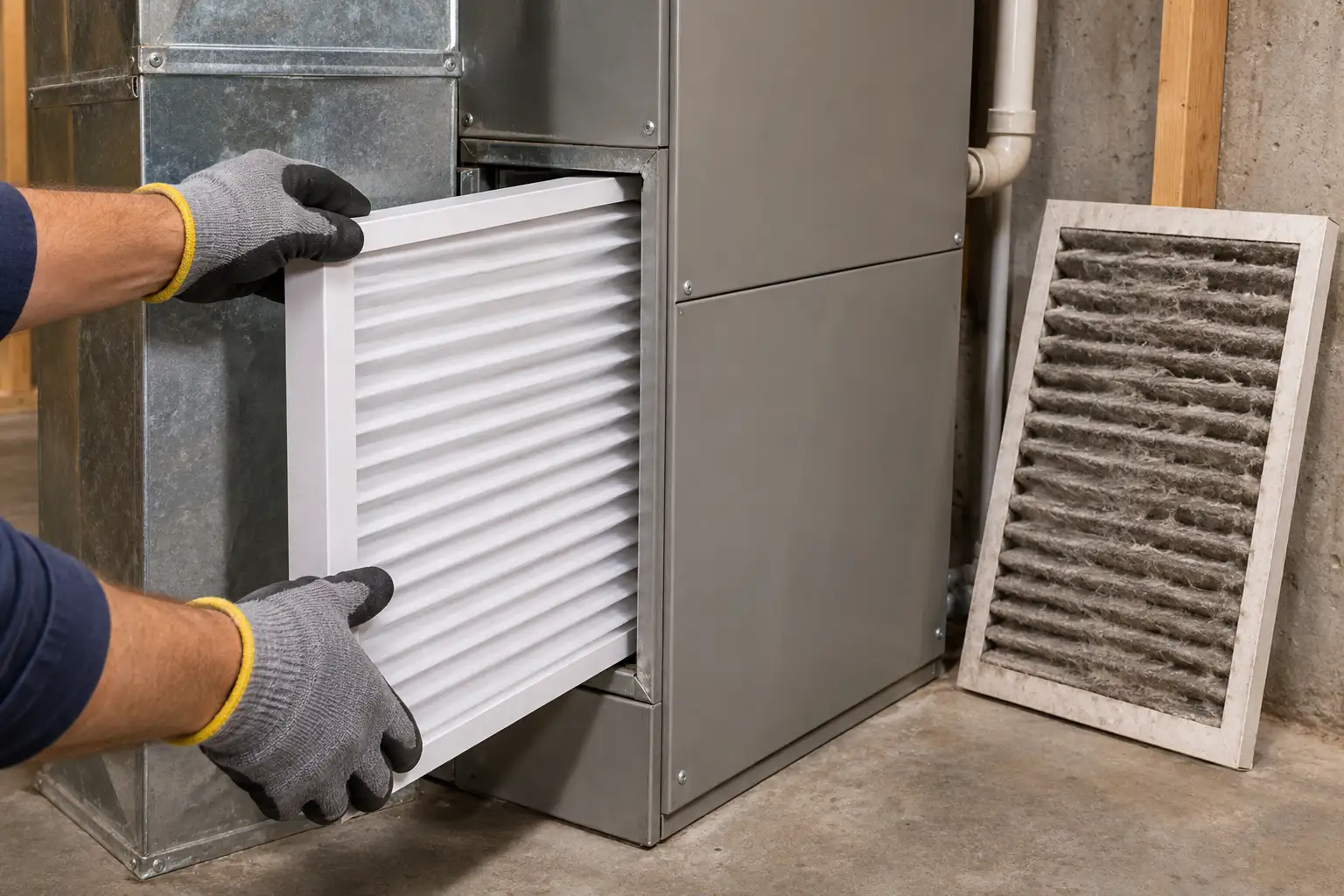
Why a furnace tune up matters here
Your furnace doesn’t fail at random. It fails when it’s working hardest, and in Sioux City that means the middle of a cold snap, often at night. A tune up is your chance to find the cracked igniter, the fouled flame sensor or the weak capacitor in September instead of January.
It also keeps the furnace safe. A technician checks the heat exchanger, venting and combustion, the things that keep carbon monoxide where it belongs. And a clean, adjusted furnace simply heats the house more evenly.
A furnace tune up in Sioux City is quickest to book in early fall, before the first hard freeze brings a wave of no heat calls. But if your furnace is acting up now, don’t wait for next year.
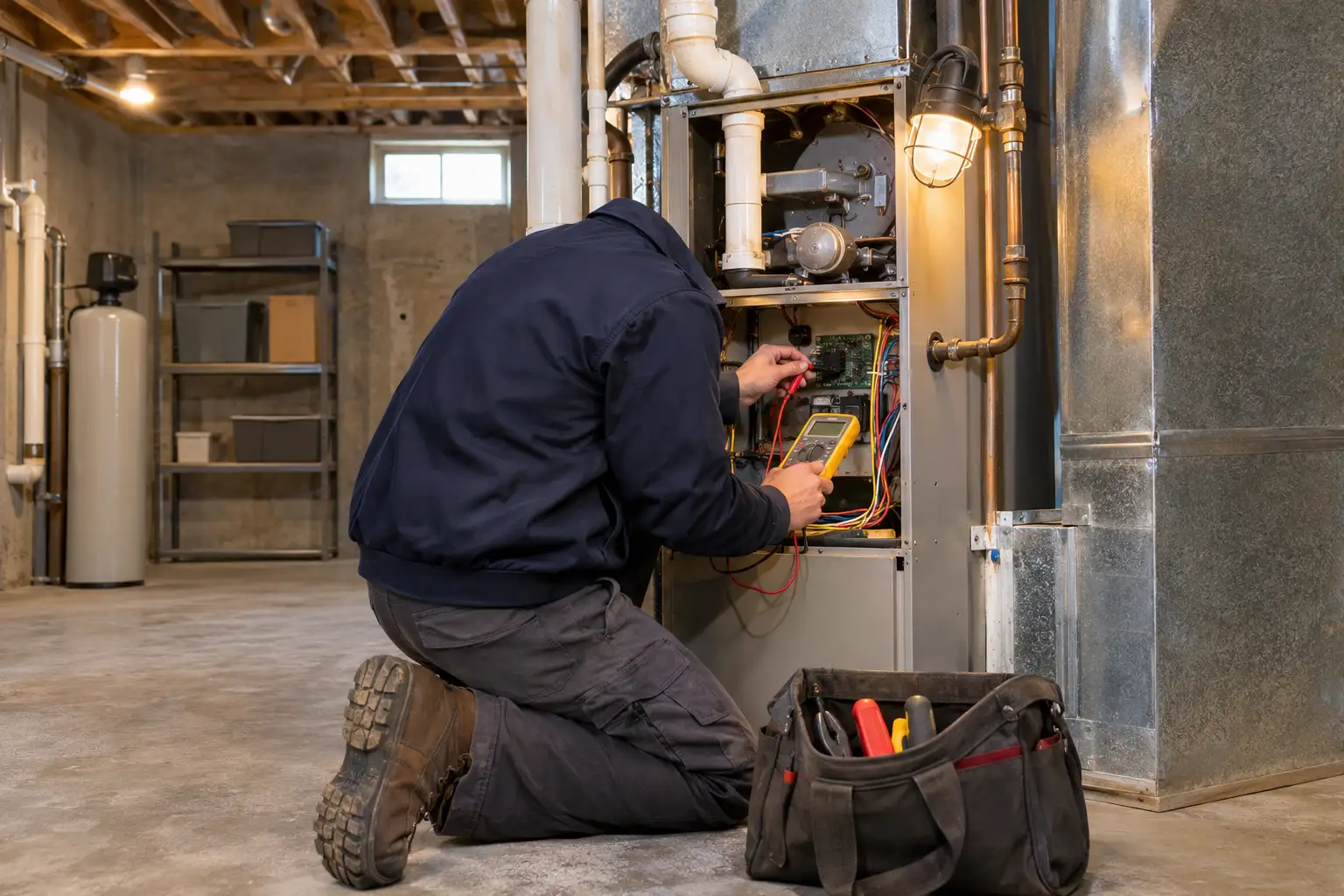
What a tune up covers
A typical gas furnace tune up includes these checks. Ask the technician to walk you through what they find.
Clean and adjust
- Inspect and clean burners and the flame sensor
- Check the igniter for cracks and proper resistance
- Check and replace the filter (or show you how)
- Inspect the blower wheel and motor; check the capacitor
- Clean the condensate trap and drain on high efficiency units
- Check thermostat operation and settings
Test for safety
- Visual inspection of the heat exchanger
- Check venting, flue pipe and outdoor terminations
- Test the pressure switch, high limit and rollout switches
- Check gas valve operation and manifold pressure
- Measure temperature rise across the furnace
- Check for carbon monoxide around the furnace
Signs your furnace is overdue
It takes two tries to light
Often a weak igniter or a dirty flame sensor: both easy to catch early and miserable to discover at midnight.
Short cycling
On, off, on again every few minutes. Often a filter or airflow problem that makes the furnace overheat.
New noises
Squeals, rattles or a boom at ignition. Each one points to a different part that needs a look.
Uneven rooms
Upstairs cold, basement warm. Could be airflow, ductwork or a blower losing strength.
Dust and dry air
More dust than usual, or a humidifier that has stopped working, usually means filters and pads are past due.
No check in years
If you can’t remember the last time someone looked at it, it’s time.
Your own fall checklist
A yearly furnace tune up in Sioux City covers the technical side. Between professional visits, these keep a furnace in good shape through the winter:
- Run the heat on a cool September evening. A short dusty smell is normal; anything that lingers isn’t.
- Swap the filter and buy two spares for the winter.
- Clear storage away from the furnace and water heater: at least a few feet.
- Walk the outside of the house and find your furnace vent pipes so you know where to clear snow.
- Replace the humidifier pad and open its water valve for the season.
- Test every smoke and carbon monoxide alarm.
- Open all supply registers and make sure furniture isn’t blocking return grilles.
Midwinter problem instead of a checkup? Go straight to furnace repair or no heat help.

Tune up or repair? How to tell
A tune up is for a furnace that works. If yours is already misbehaving, you need a repair visit, and you should say so when you call so the technician plans for it.
- Book a tune up if the furnace runs normally and it has been a year or more since anyone looked at it.
- Book a tune up soon if you’ve noticed small changes: a new sound, more dust, a slower start.
- Call for repair if there’s no heat, a blinking fault code, short cycling, water around the furnace or a smell that lingers.
A furnace tune up in Sioux City is easiest to schedule in September and October, before the first cold snap brings a wave of no heat calls.
What to expect on the day
The technician will need clear access to the furnace and to the thermostat, and a few minutes outside to look at the vent pipes. They’ll shut off power and gas while they clean, then run the furnace through several full cycles while they measure and test.
At the end, ask them to show you anything worth watching: an igniter that is starting to wear, a flame sensor that fouls quickly, a vent pipe that sags. Knowing that now lets you plan for it instead of discovering it on a subzero night.
If your home has a heat pump or central air, ask about checking the cooling side in spring as well. See AC tune ups.
Tune up questions
Is it too late for a tune up once winter has started?
No. Early fall is ideal, but a furnace can be checked any time. If yours has started making a new noise, taking two tries to light or short cycling, a midwinter check is a smart way to catch a failing part before it leaves you without heat on the coldest night.
How often does a furnace need a tune up?
Once a year is the common recommendation for gas furnaces. Homes with pets, ongoing remodeling dust or a furnace that runs very long hours can benefit from more frequent filter changes between visits. Heat pumps, which heat and cool, are best checked twice a year.
Can I tune up my own furnace?
You can handle the filter, keep the area around the furnace clear, clear the outdoor vents and test your CO alarms. Cleaning burners, testing gas pressure, checking the heat exchanger and measuring combustion need training and instruments, so leave those to a licensed technician.
Does a tune up include the humidifier?
Ask for it when you call. Furnace mounted humidifiers need a new pad or panel and a check of the water valve and drain each season, and it is easy to take care of during the same visit.
How long does a furnace tune up take?
Plan on roughly an hour for a typical gas furnace, longer if the technician finds a part that needs attention. You do not need to do anything to prepare beyond clearing a path to the furnace.
Ready to book? Call (555) 010-0142
Related services
- Furnace RepairGas furnace not lighting, blowing cold, cycling off or locked out with a flashing light.
- Heat Pump RepairIced over outdoor unit, lukewarm air, or backup heat running nonstop.
- Boiler & Hot Water HeatCold radiators, banging pipes, low pressure or a boiler that keeps shutting down.
- AC RepairCentral air that will not start, trips the breaker, buzzes or leaks water.